The Great Wave off Kanagawa
by Hokusai
written for The Artist magazine ~ June 2026 issue
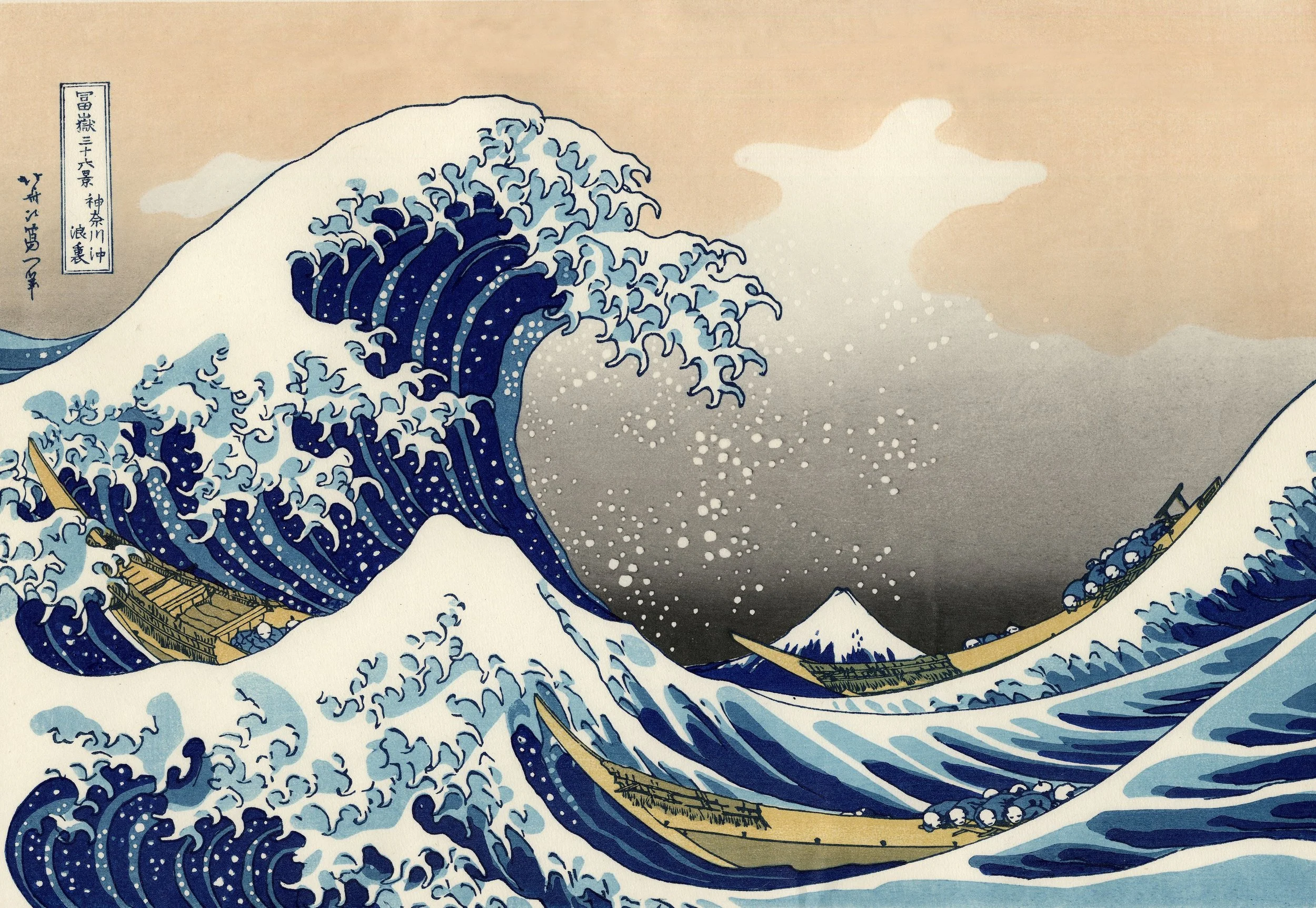
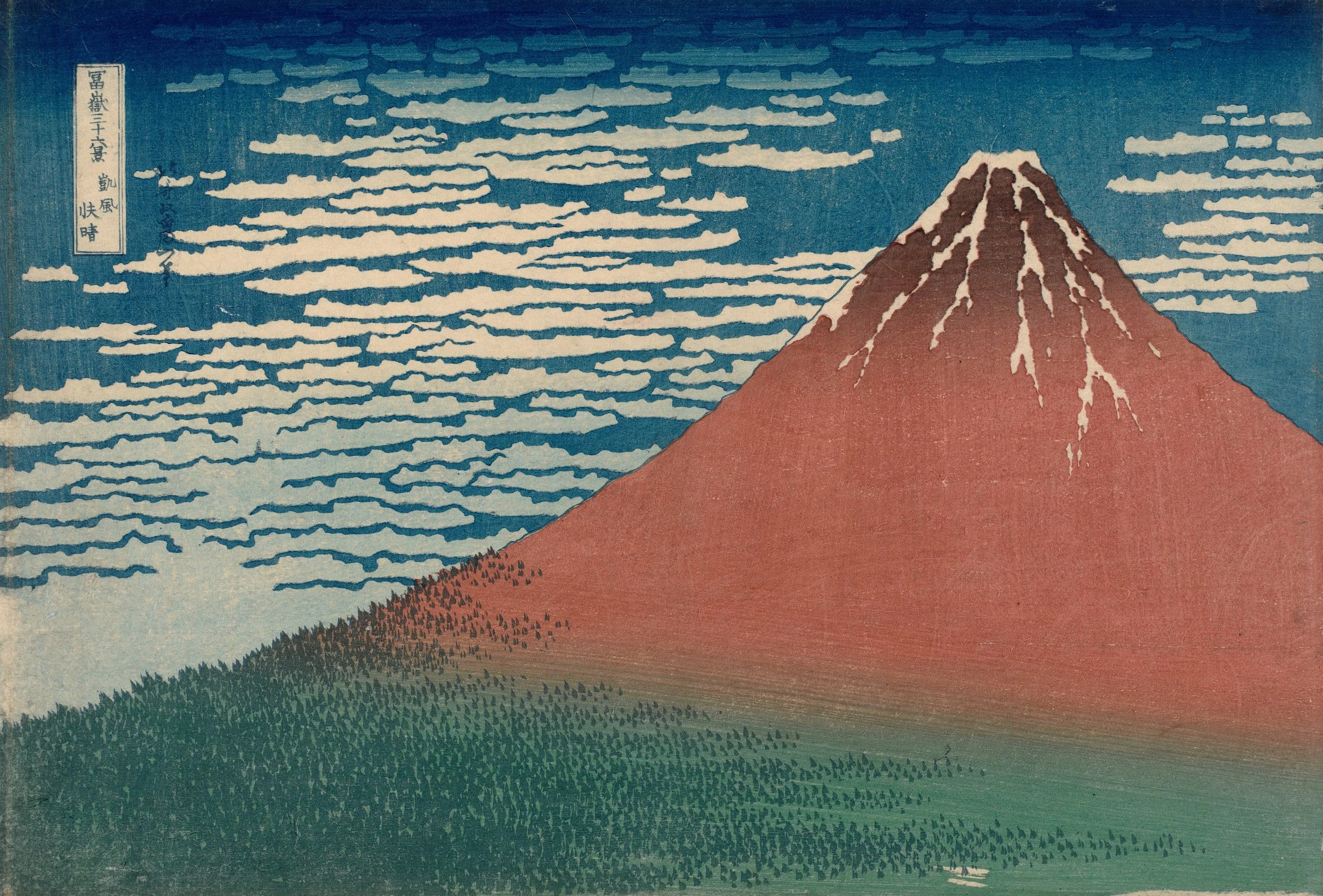
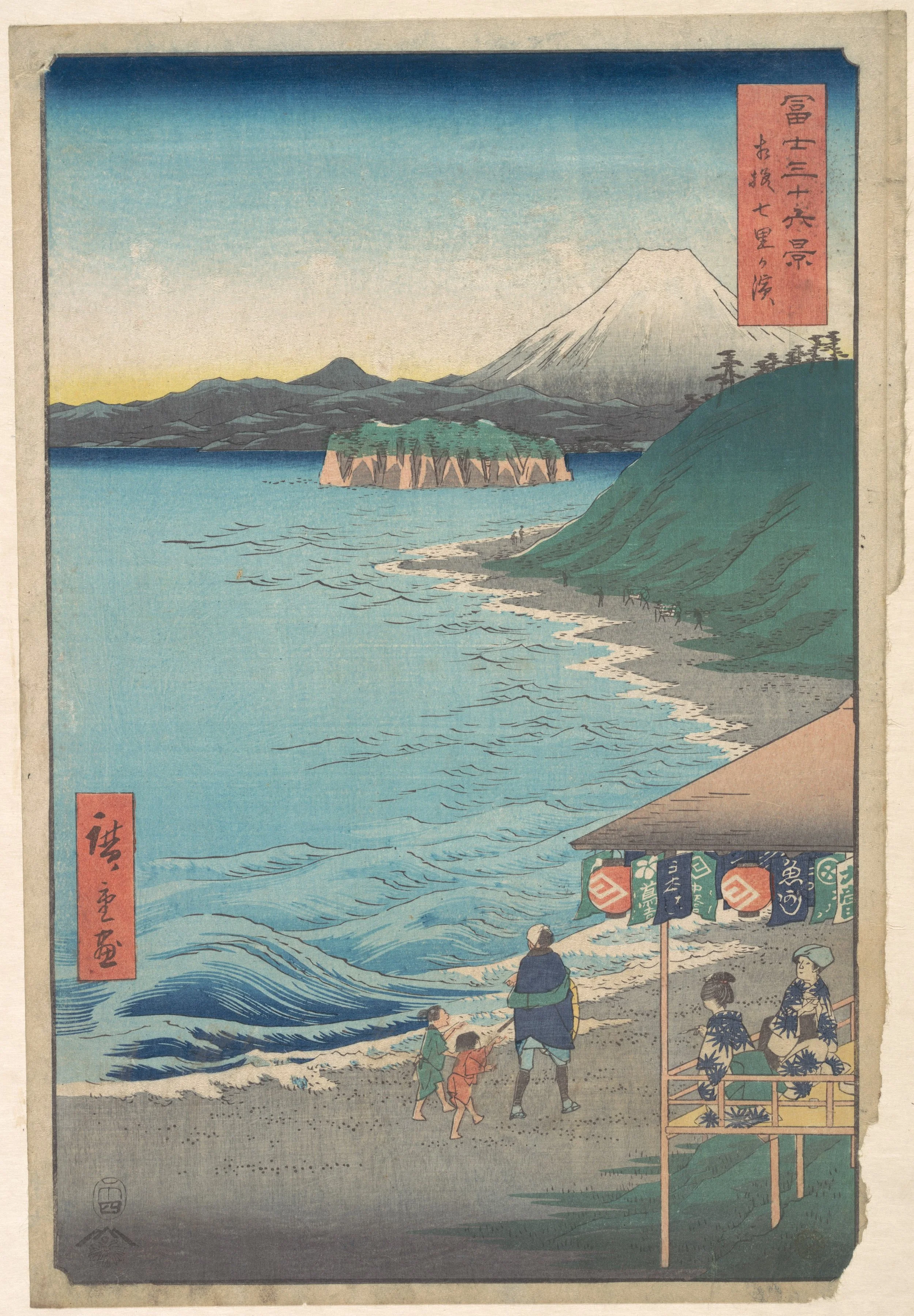
The Great Wave off Kanagawa stands alone in this series as the only print by a non-European artist. Such an iconic and original image, the first in his series ‘Thirty-six views of Mount Fuji’, it is Hokusai’s best-known work, one so widely reproduced in Europe, it is considered the quintessential expression of Japanese art. This artwork has been described as ‘possibly the most reproduced image in the history of all art,’ and could certainly be the most famous in Japanese history.
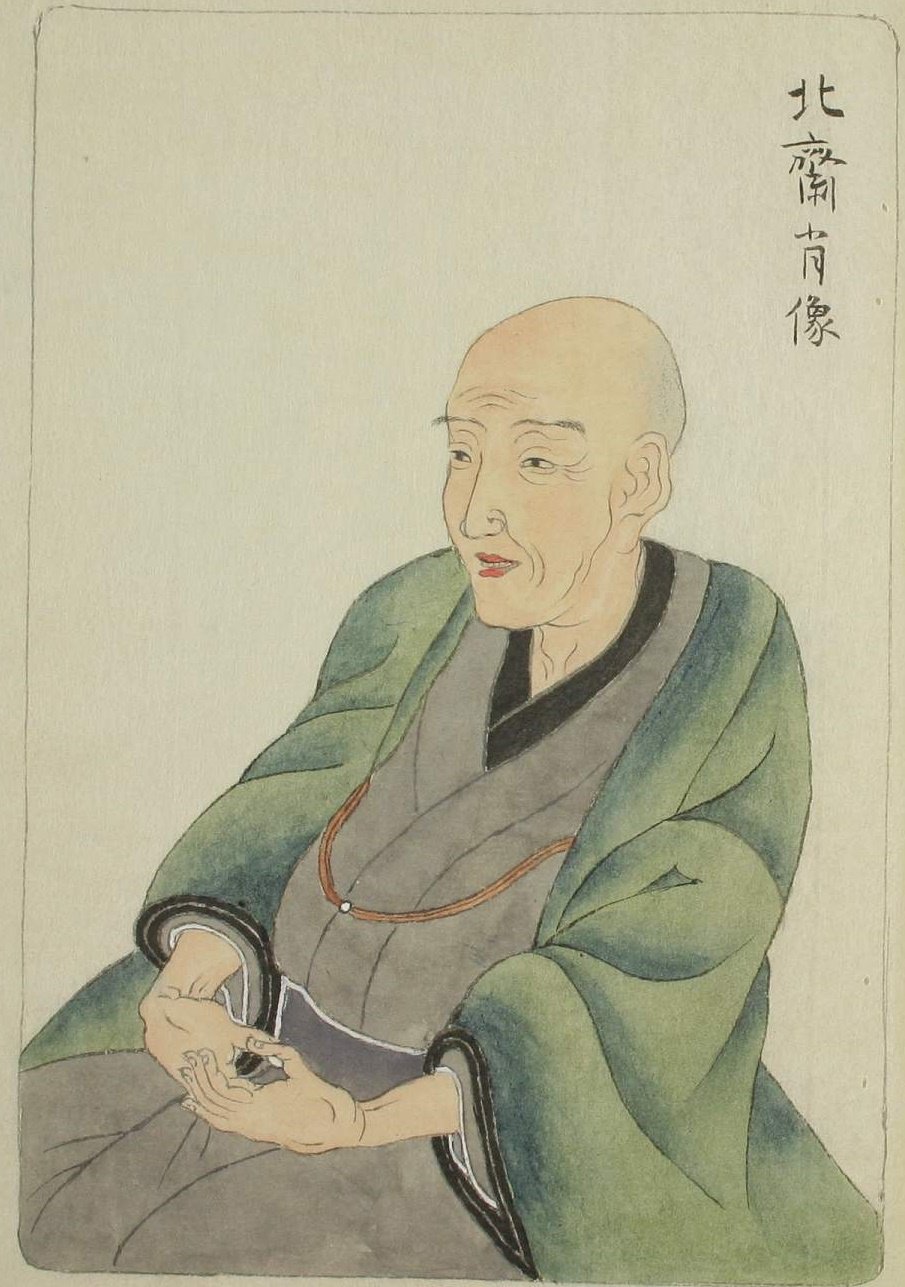
It’s creator Katsushika Hokusai was born Nakamura Hachiemon in 1760 in Edo (present day Tokyo.) He began training as a woodcutter at the age of 15 and three years later he entered the workshop of Katsukawa Shunsho as an apprentice. Having quickly mastered his craft, he soon became bored and began travelling extensively across Japan, over a period of a few footloose years, changing locations and teachers as he went. Throughout his long life he travelled ceaselessly in search of new subjects and inner spirituality. With each ‘artistic period’ he changed his name – he ended up with thirty different names in total. In his repertoire he could draw on all forms and techniques of painting and woodcut, depicting traditional Japanese themes (samurai, landscapes) but also erotic and mythological themes.
“He is an island, a continent, a whole world in himself.” Edgar Degas on Hokusai
The Great Wave off Kanagawa (1830 – 32) was created relatively late in life, whilst in his seventies, during the Edo period of Japanese history. The Prussian-blue ink was the latest discovery, a synthetic pigment from faraway Europe, which was more permanent than traditional natural indigo pigment, which tended to fade. It revolutionised Japanese printmaking. It was a very auspicious time for a new blue – ultramarine remained fiendishly expensive and the supply was inconstant – Prussian blue was a tenth of the price. At a time when chemists were experimenting with synthetic substances and creating happy accidents in the case of this blue, it felt like anything was possible. In 1835, George Field called this ‘rather modern pigment’, ‘deep and powerful – of vast body and considerable transparency.’
Hokusai loved his experiments in ink and wanted to use this exciting new colour to capture views of Mount Fuji. The ink did, however, cling to the woodblocks which is why subsequent prints had black contours, and why the first versions of The Great Wave off Kanagawa are considered the finest. A tireless perfectionist, always trying to improve upon the last print, meant that hundreds of views were attempted while only thirty-six made the final cut (in actual fact, there are forty six prints included in the collection).
Created at a time of financial and emotional stress for Hokusai, following a stroke in 1827 and the death of his wife, these personal challenges are often attributed to the power and innovation found in these prints.
Three fishing boats are being tossed about in the middle of a wild sea with a view of snow capped Mount Fuji in the far-off distance. It is most certainly the composition that makes it such a captivating image, the stylised design and the enormity of the wave in comparison to the fishermen – a comment on our small place in the universe perhaps? Immensely popular, the image was reproduced so many times (1000 copies were initially printed) that the rectangular box containing the title (top left) began to show signs of wear.
Hokusai’s legacy cannot be understated. His huge oeuvre comprises of 500 illustrated books, 30,000 coloured woodcuts (known as Ukiyo-e) and many silk paintings. His popularity amongst European painters had a lot to do with the re-opening of Japanese trade routes in 1853-4 with the craze of all things Japanese ‘Japonisme’ peaking between 1860 – 1890. The phenomenon was driven by an influx of Japanese art, Ukiyo-e woodblock prints, ceramics and textiles, influencing Western artists in particular Van Gogh, Monet and the musician Debussy. Claude Monet was known to have an enviable collection of Ukiyo-e prints and Van Gogh experimented with his own versions of Japanese paintings, using their distinctive dark outlines throughout his own work. He wrote that the print had a ‘terrifying’ emotional impact.
One can appreciate the artists perfectionism through his own words, ‘From the age of six I had a passion for copying. Since the age of fifty I have published many drawings and in my seventieth year there is nothing worth taking into account. At eight-six I shall progress further, at ninety I shall penetrate the secret meaning of animals….and by one hundred I shall perhaps truly have reached the level of marvellous and divine.’
An accompanying video is available to Studio Members via www.painters-online.co.uk