The Birth of Venus
by Sandro Botticelli
for The Artist magazine ~ February 2026 issue
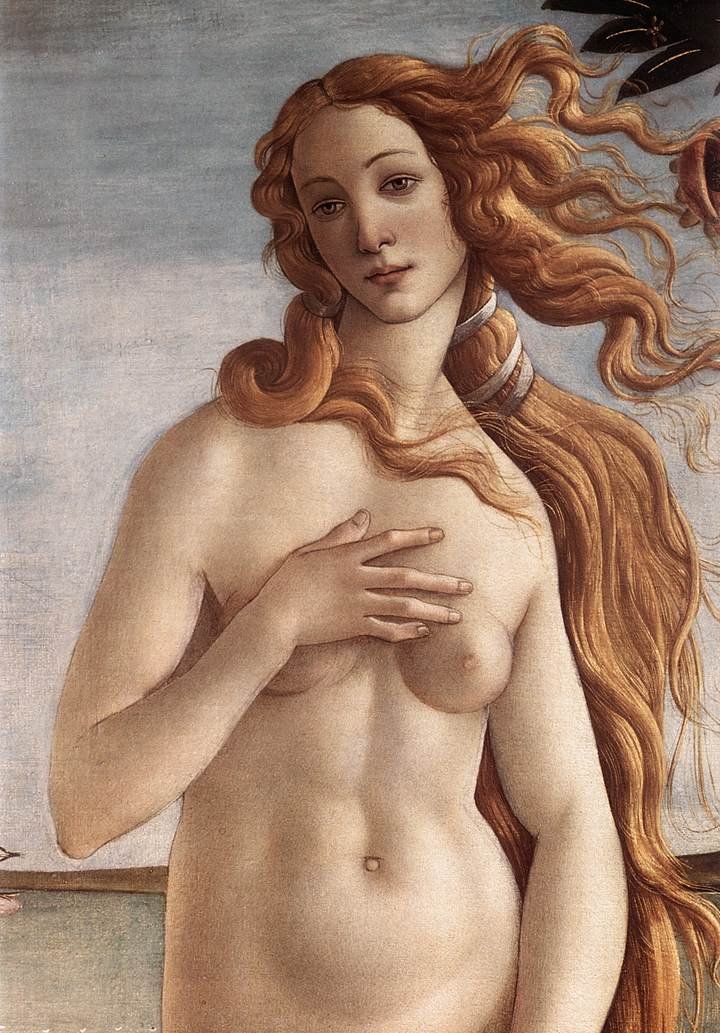
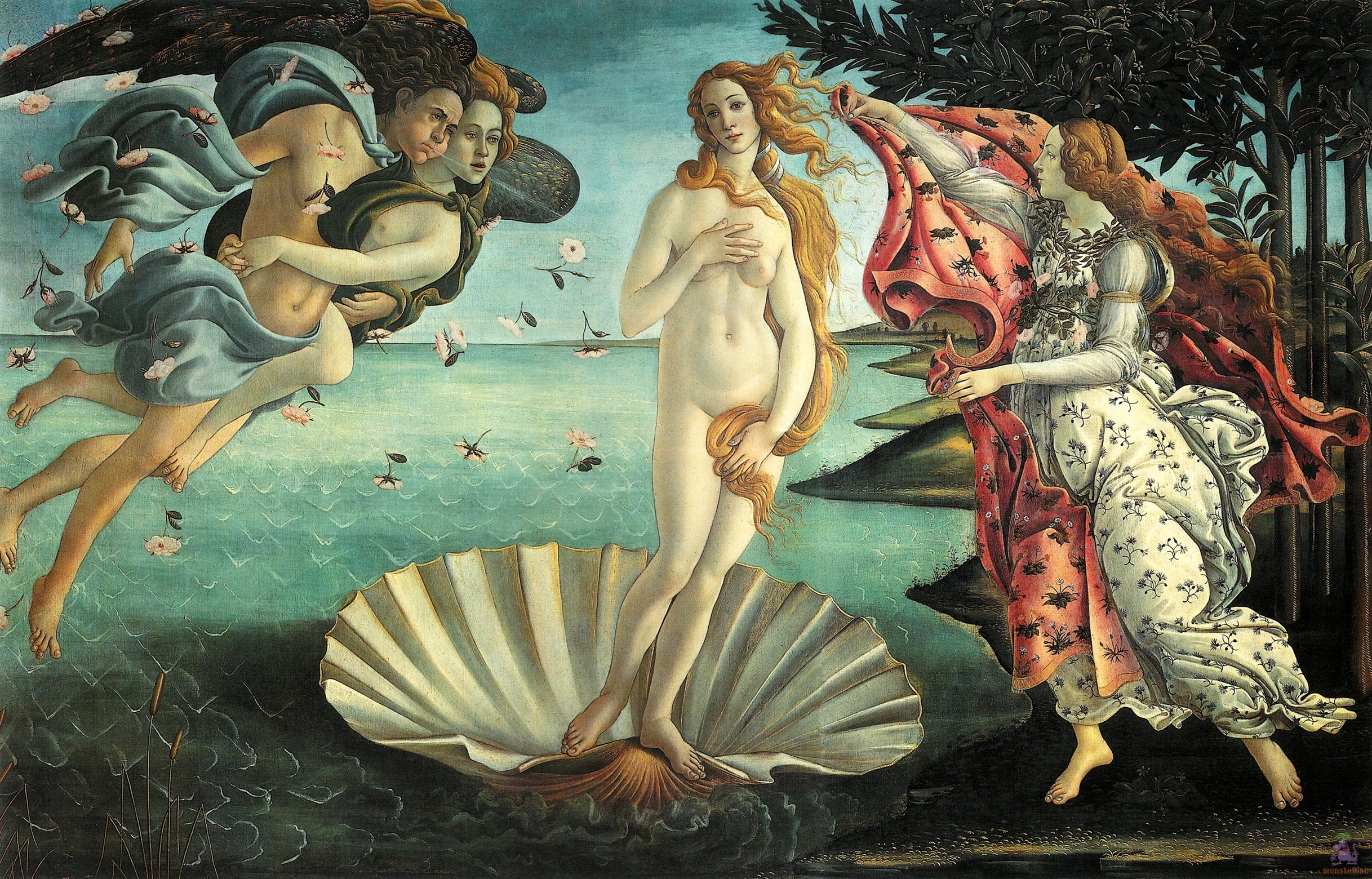
The Birth of Venus is part of our visual lexicon – we have all seen her, but what do we really know about this goddess? All the medieval fantasy and symbolism of 14th-century Florence are wrapped up in Botticelli’s graceful, linear style. No one quite captured the curvaceous femininity of the female form like Botticelli, the long-plaited locks, the bee-stung lips and almond eyes that are synonymous with Botticelli’s women.
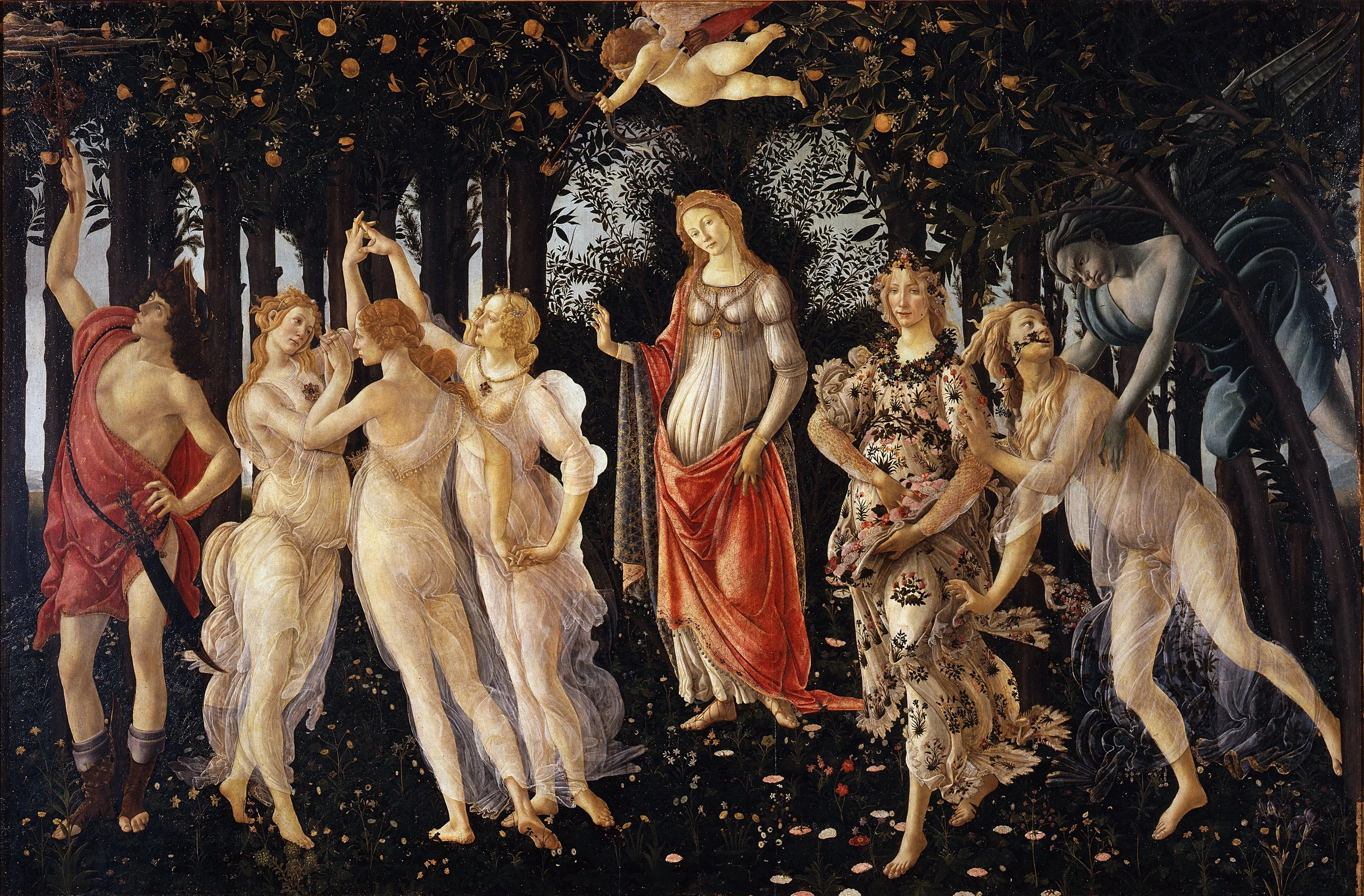
After returning from Rome in the Spring of 1482, Botticelli executed a series of mythological paintings over the course of a decade, commissioned by the powerful Medici family of Florence. They were to become his most celebrated works for their beauty, but also their mystery. La Primavera (1477-8) now housed in the Uffizi Gallery, remains unclear in its meaning – art historians still hotly debate its narrative even today. The painting, along with The Birth of Venus, were executed for Lorenzo di Pierfrancesco de’ Medici, the former probably on the occasion of his wedding. Both depict Venus, Goddess of Love, in all her beauty, surrounded by an abundant wildflower meadow and springing from the foaming waters of the sea.
According to a recently discovered inventory, in 1499 La Primavera was hanging in the bedchamber anteroom in the Florentine palace of Pierfranco de’ Medici and not in that of Lorenzo the Magnificent as had previously been assumed. Lorenzo di Pierfranco was a cousin twice removed and from a younger branch of the Medici banking family. This would account for its size (2 metres x 3.1 metres) as it hung above a sofa, and its subject matter.
It is interesting, therefore that The Birth of Venus was created almost ten years later and equally as mysterious in its provenance. Art historians speculate that it was intended for a country villa rather than a townhouse as it was painted on canvas, which was less expensive than wooden panels. The country villas served as refuges from the noise, heat and hectic business of the city. In the country you were free to relax and enjoy a slower pace of life and the artwork responded to that with arcadian subjects – bucolic landscapes, women bathing, singers, people dancing, bathed in sunlight.
Let us look more closely at The Birth of Venus and try to decipher some of those famous Renaissance symbols, so prevalent in paintings of that period. She is 1.8m x 2.85m – glorious in both size and subject matter. One could argue that nothing as powerful as a woman floating in a conch shell has been created before or since. The pretty palette of porcelain skin, rose red and silvery blue silks, cascades of golden locks, rosebuds and ribbons evoke the Greek myth he was inspired by, or perhaps the poem of the same name by Angelo Poliziano, in the great trend for classical themes at that time. Venus, born from sea foam, hovers over a conch shell as she is blown to the sacred island of Cyprus by Zephyrus (the God of Winds) and he is being wrapped in the arms of Aura. On the land, the nymph Pomona (Goddess of Spring) waits to cover Venus with a beautiful brocade cloth embroidered in Spring flowers.
At the start of the 16th century, the painting hung together with Primavera in the country villa of the Medici di Castello. A nude female form such as this would have been highly unusual for its time – they were only acceptable in depictions of Adam and Eve and were potentially associated with sin. It is thought that Botticelli modelled Venus on the ancient statue of Venus in the Medici collection and the laurel bushes on the island were symbolic of the Medici family emblem. The white shimmering flesh colour is reminiscent of marble, while her posture recalls classical sculpture. You will notice the dark line contouring the edges of the figures, allowing them to stand out and bring them into the foreground. Roses – symbolic of beauty and love - fall from the sky, celebrating the birth of Venus.
The Florentine Neoplatonic school of thought suggested that Venus, seen as an earthly goddess could arouse physical love and sensation, while Venus the divine goddess could lead the viewer to a higher beauty, and ultimately to the love of God. These views are speculative, but what we do know is that these works make up a rare group of paintings matched in both pictoral content and stylistic expression. Love is at the heart of these works, celebrating the union of bride and groom and characterised by the grace and beauty of the idealised female form – not seen before in paintings of this period. They are a supremely precious series of works that include Pallas and the Centaur, 1482, La Primavera, 1478, The Birth of Venus, 1486 and Venus and Mars, 1485. I have spent much time in the Uffizi, gazing at these masterpieces!
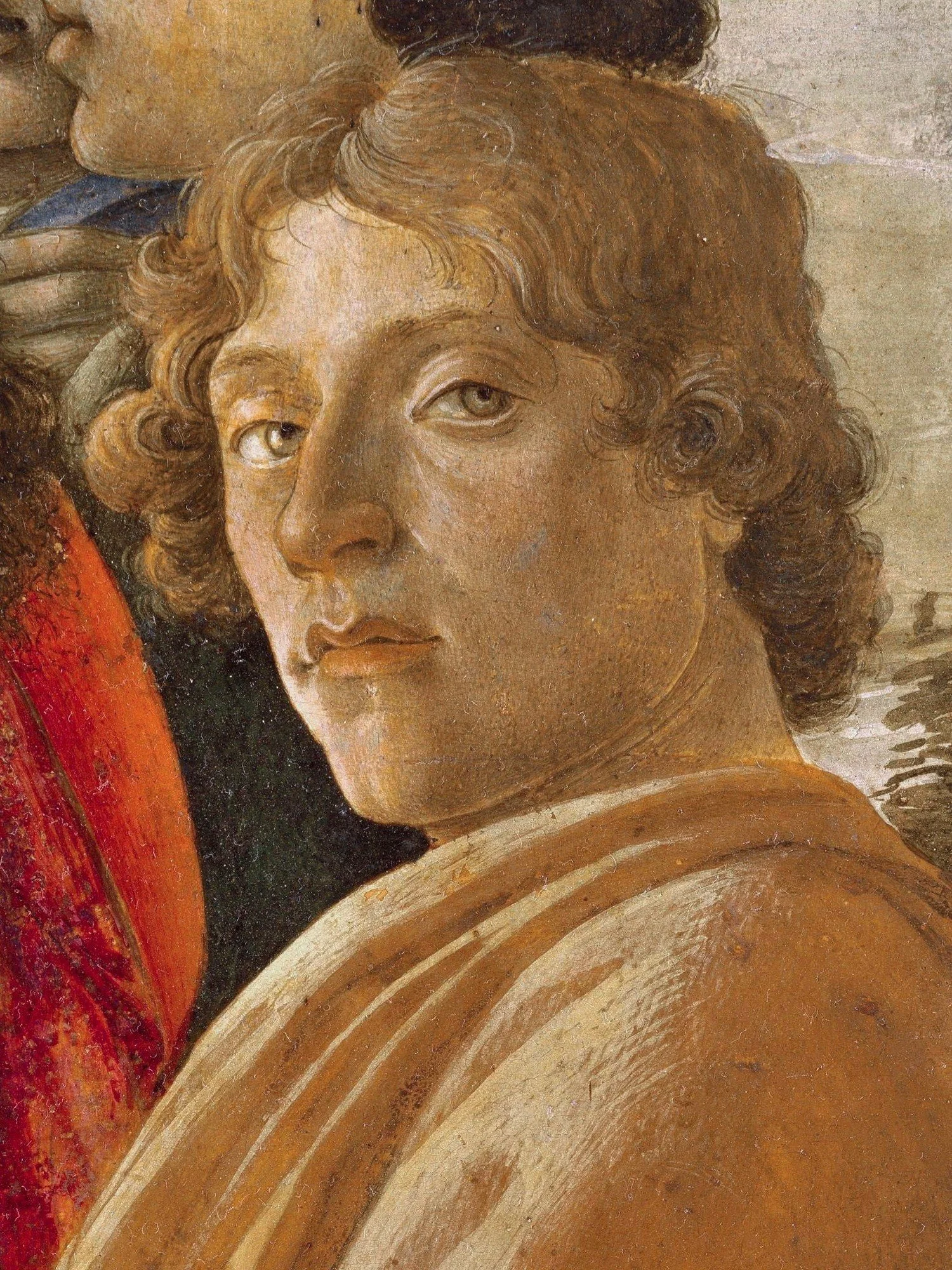
Further elevating the romance of these works, is the poetic life of the painter himself. Sandro Botticelli never married and some scholars believe he loved, unrequitedly, Simonetta Vespucci, a married noblewoman and favourite of the Medici. Before he died in 1510 in Florence, he asked to be buried at Simonetta’s feet, and his wishes were carried out.
What a fitting end for a painter who had all been forgotten until his paintings were rediscovered in the 19th century through a revival of interest in Renaissance art.
The video accompanying this feature is available to view on Painters Online for Studio members.